

Savannah National Wildlife Refuge

From Old Town Bluffton Inn
By Car 35 Minutes
By Walk Not Walkable
Details
Address

694 Beech Hill Lane, Hardeeville, SC 29927, United States

Phone +1 843-784-2468
Website

www.fws.gov/refuge/savannah

Hours

Mon - Fri: 10 am - 2 pm
(excluding federal holidays)

Alligator Sunning, Larry A. WoodwardUSFWS, Public Domain, httpswww.fws.govmediaokefenokee-swamp-alligator-sunning

American Alligator - Larry A. Woodward/USFWS

Thirty thousand acres of tidal marsh, old rice fields, and bottomland hardwood on both sides of the Savannah River, with a four and a half mile gravel loop running straight through the middle of it. You will see alligators. You will very likely stop counting. Half an hour from our front door, and it costs nothing to get in.
The Laurel Hill Wildlife Drive is the reason to come, and the beauty of it is that you do it from the car. It is a one-way gravel loop running along the tops of earthen dikes, with water on both sides, and you go at whatever speed you like, stopping wherever something moves. Alligators lie up on the banks, sometimes a dozen in an afternoon and sometimes many more. Great blue herons stand about looking put out. Anhingas hold their wings open to dry. There are wood ducks, purple gallinules picking across the lily pads, bald eagles overhead if you are lucky, and swallow-tailed kites in the warmer months. Well over two hundred bird species have been recorded here, because the refuge sits on the Atlantic Flyway and has done so since 1927, when Calvin Coolidge set aside the first 2,352 acres of it. If you would rather be out of the car, the dikes double as walking and cycling trails, and they are flat, wide, and grassy the whole way.
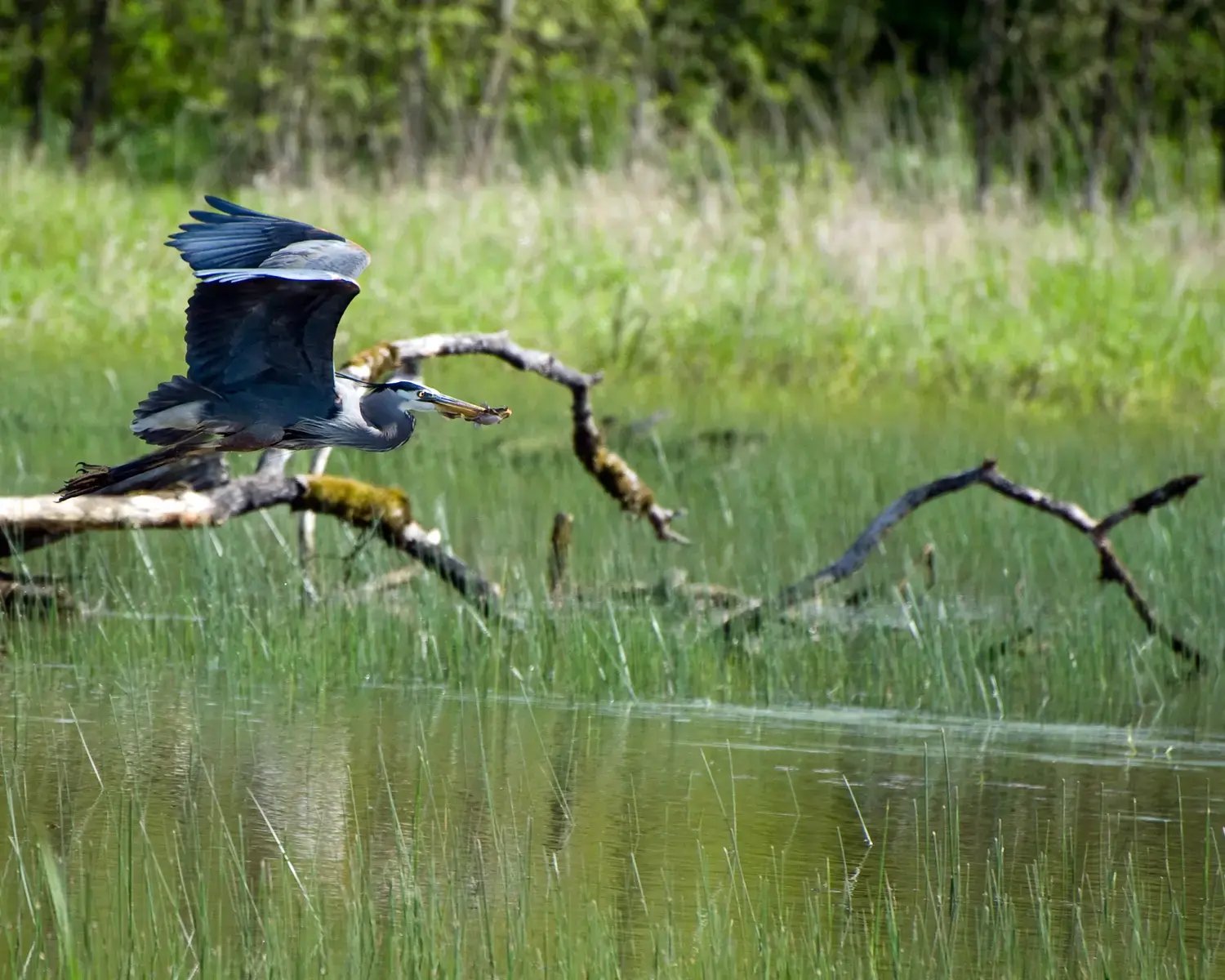
Great Blue Heron, Gentry, GeorgeUSFWS, Public Domain, httpswww.fws.govmediagreat-blue-heron-52

Great Blue Heron - George Gentry/USFWS

What you are actually driving through is a landscape people built. Between 1830 and 1861 there were at least thirty rice plantations on this ground, and the canals and levees holding the water in place today were cut by enslaved Africans and African Americans alongside immigrant Irish laborers. The owners considered the ground too unhealthy to live on themselves, so there are no grand houses out here, only the water system. After the rice economy collapsed and a dam flooded the fields upstream, those abandoned plantations became the first core of the refuge, and in the 1930s an African American Civilian Conservation Corps company based near Hardeeville rebuilt the dikes and turned a rice-growing system into a wintering ground for ducks. It is worth knowing that before you go, because the straight lines and right angles in the water stop looking like landscape and start looking like what they are. Two practical notes. There is no entrance fee; the drive and the trails are open every day from sunrise to sunset, and the Visitor Center is a separate stop 3 miles away on different roads with much shorter hours, so plan for both if you want both. And bring the car. Cell service out there is poor and the refuge specifically asks people not to arrive by rideshare.
Old Town Bluffton Inn
Join the Bluffton Inn-sider to stay connected! From the events shaping each season to the small discoveries that make this place feel like home.

By submitting this form, I agree to receive communications from Old Town Bluffton Inn. You can unsubscribe at any time.
Purple Gallinules with chick, Mary Lou DicksonUSFWS, Public Domain, httpswww.fws.govmediapurple-gallinules-chick

Purple Gallinules with chick - Mary Lou Dickson/USFWS

Why Visit

More than 30,000 acres of marsh and forest, over two hundred recorded bird species, and alligators along the banks, all about half an hour from the Inn. And you can see a great deal of it without leaving the driver's seat.

  • A 4.5-mile one-way wildlife drive you can do from the driver's seat, which makes this one of the few genuinely wild places that needs no hiking boots, no guide, and no particular fitness level
  • Alligators in numbers, reliably, along with wading birds, wood ducks, purple gallinules, anhingas, bald eagles, and better than two hundred recorded bird species on the Atlantic Flyway
  • Over 30,000 acres straddling two states, with tidal freshwater marsh and bottomland hardwood forest that look like nothing else within an hour of here
  • Flat, wide dike trails off the drive for walking and cycling, plus single-track through the woods at Kingfisher Pond, so you can make it twenty minutes or a whole morning
  • No entrance fee, no booking, no season to work around, and sunrise-to-sunset access 365 days a year
  • Close enough to Old Town that you can be out on the dikes at first light and back at the Inn for a late breakfast, with the car parked for the rest of the day
Message from the Harrisons

One of my favorite places to really dig into the feel of the Lowcountry nature scene.  It's a special place and I would encourage anyone interested in nature to visit; you will not be disappointed.  Bring bug spray though and plenty of water.

Vince Harrison

Best Time To Visit

The refuge is open every day of the year, and each season gives you something different, so the honest answer is that there is no wrong month, only different birds. Winter is the classic season and the one the place was created for, when thousands of ducks and other waterfowl drop in off the flyway and the cooler air makes walking the dikes a pleasure. Spring brings migration and nesting, wading birds in numbers, and the swallow-tailed kites arriving overhead. Summer is hot and humid, and the middle of the day is quiet, but the alligators are at their most active, and an early start is genuinely lovely. Fall thins the crowds and the humidity together, and the light turns gold over the impoundments. Water levels are managed through the year for the birds rather than for visitors, so conditions on the drive do change, and it is always worth checking the refuge's site for closures before you set out.

Picture Frame Best Light

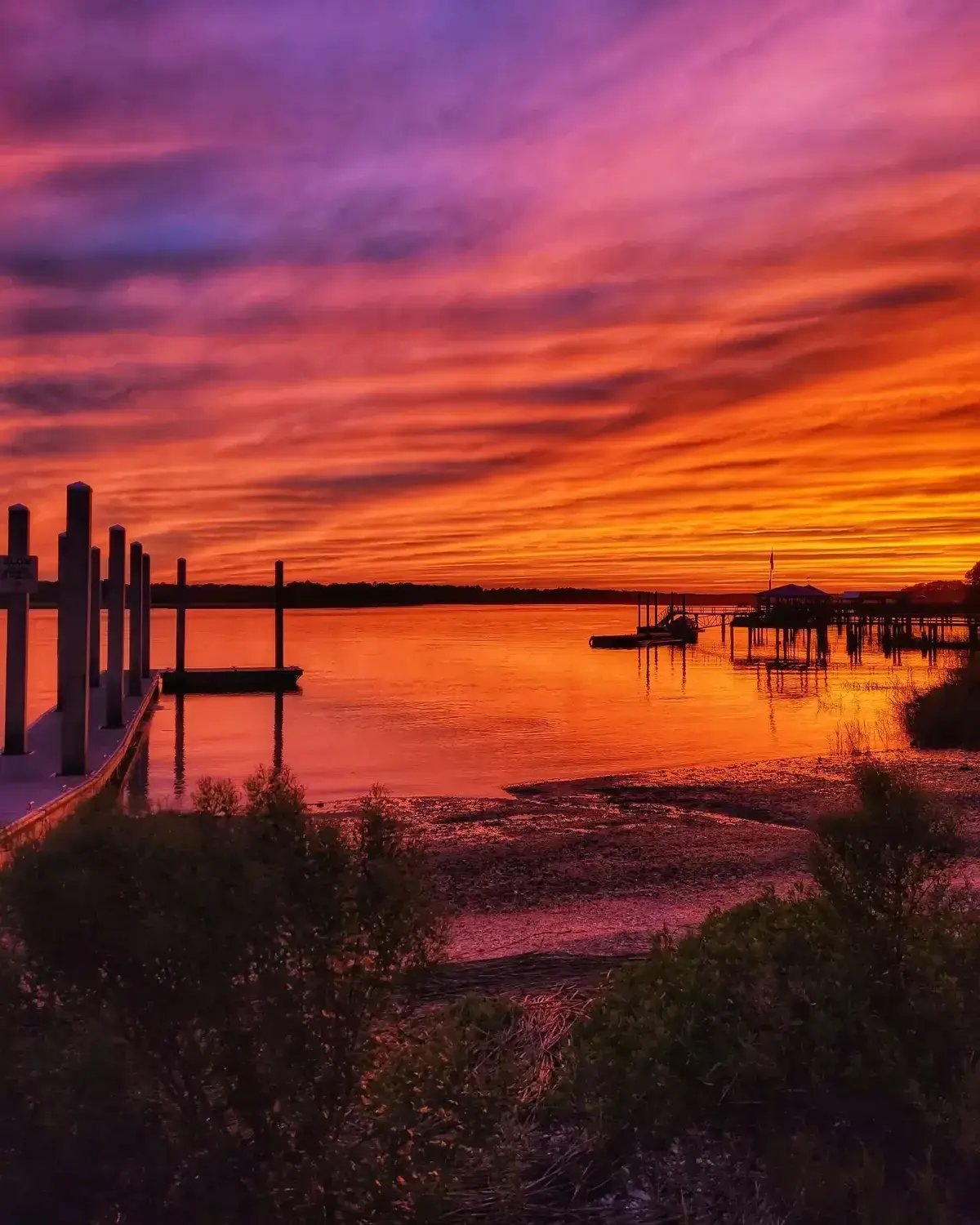
The first hour after sunrise, without much competition. The water goes still, the mist sits on the impoundments, and the wildlife is moving before the heat arrives. Late afternoon into sunset is the second-best window and much easier to talk people into.

Sunrise Weather

Comfortable from October through April, which is also the best wildlife season, so this is a rare case where the two line up. May through September is hot and humid, so go early, carry water, and expect insects. The drive is gravel and generally fine after rain, though heavy weather can affect access.

Hours and Access

The Wildlife Drive and all trails are open daily, sunrise to sunset, with no entrance fee. The Visitor Center on Beech Hill Lane keeps much shorter hours, currently Monday to Friday 10 AM to 2 PM and closed on federal holidays, so it is easy to miss if you go at the weekend. The two are 3 miles apart on separate roads. Check current conditions and any closures before you drive out.

Camera For Photographers

Bring the longest lens you own and shoot from the car, which works better as a hide than you would expect. The alligators on the bank and the wading birds in the shallows are the obvious subjects, but the dikes themselves make good long straight lines at either end of the day. Do not get out to approach anything.

Good to Know

No dogs on the trails at all, leashed or not, though they may stay in the car on the drive. Do not come by rideshare, as cell service is unreliable and you can't call for a lift back. Parts of the refuge are open to hunting in season, so check before you go. Ticks are a genuine nuisance in the warmer months. Download or pick up the refuge map in advance, because you will not be loading it out there.

From the Marsh to the May River

Breakfast at the Inn
8:30 AM

Sit down, take your time with breakfast, and fill a water bottle before you go. There is nowhere to buy food out on the refuge.

The Laurel Hill Wildlife Drive
9:30 AM

Half an hour to the refuge signs off Highway 170. The one-way loop begins under the live oaks of the old Laurel Hill Plantation, and one of the first stops is the Cistern Trail and its wooden photo blind. From there, take the gravel slowly and pull over at the parking stops whenever something moves. By mid-morning the alligators are hauling out onto the banks to warm up, so give the drive a good two hours.

Out on Foot
11:30 AM

Park at one of the pull-offs and walk a stretch of the wide, grassy dikes that cross the loop. Flat, quiet, and far better at walking pace than through glass. Keep well back from the water's edge, and head home when you have had your fill.

Late Lunch in Old Town
1:30 PM

Park the car at the Inn and walk to lunch. Everything is within a few blocks, which, after a morning on the refuge, is the whole point of being based here.

Down to the May River
3:00 PM

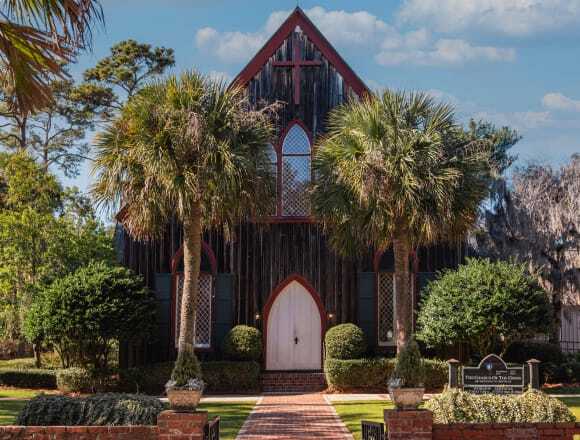
Walk to the end of Calhoun Street, past the Church of the Cross, to Wright Family Park and the Calhoun Street Dock. Then follow the water to Oyster Factory Park and the Bluffton Oyster Company, where the Toomer family has been working these waters for more than a century. After a morning among freshwater impoundments, the tidal May River shows you the other side of the Lowcountry.

Evening in Old Town
5:30 PM

Back at the Inn for our complimentary afternoon wine, with a chair in the parlor or out on the balcony, and Camo doing his rounds. When you are ready, stroll out to dinner.  With more than twenty restaurants within walking distance of your room, all that's left is choosing where. 

FAQ

No. Entry to the refuge, the Laurel Hill Wildlife Drive, and all trails are free.

The Laurel Hill Wildlife Drive and all trails are open daily from sunrise to sunset, unless otherwise posted. The Visitor Center is open Monday to Friday, 10 AM to 2 PM, and closed on federal holidays.

The refuge is about a 30-minute drive from the Old Town Bluffton Inn. The Laurel Hill Wildlife Drive is signposted off Highway 170, and the Visitor Center is a separate stop 3 miles away.

Yes. Alligators are commonly seen along the banks of the Laurel Hill Wildlife Drive, often basking on sunny mornings. Always view them from a safe distance.

The drive is a 4.5-mile one-way gravel loop. Plan for about two hours to drive slowly, stop at the pull-offs, and walk a stretch of the dike trails.

October through April offers the most comfortable weather and the best wildlife viewing, with thousands of migratory ducks arriving in winter. Mid-morning on a sunny day is ideal for spotting alligators basking along the banks. Make the Old Town Bluffton Inn your base, browse our rooms,  explore group stays and buyouts if you are bringing people with you, and book your stay at the Old Town Bluffton Inn.


Follow @BlufftonInn

Follow us on Instagram for a glimpse into daily life at the Inn

Explore Bluffton

Discover top attractions and
see how close they are.

Follow @BlufftonInn

Follow us on Instagram for a glimpse into daily life at the Inn